Introduction
Mobile applications have become an essential part of modern business operations. From online shopping and digital banking to healthcare services and enterprise communication, businesses rely on mobile apps to deliver convenient, fast, and personalized experiences. As the number of mobile app users continues to grow, so do cybersecurity threats targeting mobile applications. Data breaches, malware attacks, insecure APIs, weak authentication, and unauthorized access can lead to financial losses, reputational damage, and legal consequences.
In 2026, mobile app security is no longer optional—it is a critical business requirement. Customers trust businesses with sensitive information such as personal details, payment credentials, and confidential documents. Protecting this data requires a proactive security strategy throughout the entire application lifecycle, from development and testing to deployment and ongoing maintenance.
This guide explains the importance of mobile app security, common security risks, and the best practices businesses should follow to build secure, reliable, and trustworthy mobile applications.
Why Mobile App Security Matters
Every mobile application processes valuable information. Whether it is customer profiles, payment details, medical records, or business data, cybercriminals constantly look for vulnerabilities they can exploit.
Strong mobile app security helps businesses:
- Protect sensitive customer information.
- Prevent financial fraud and cyberattacks.
- Build customer trust and brand credibility.
- Maintain compliance with privacy regulations.
- Reduce downtime caused by security incidents.
- Protect intellectual property and business assets.
Businesses investing in Mobile App Development Services should ensure security is integrated into every stage of the development process. Secure coding practices, regular testing, and continuous monitoring help create reliable mobile applications that protect both businesses and users.
Common Mobile App Security Threats
Understanding potential threats is the first step toward building secure mobile applications.
1. Data Breaches
Improperly secured applications can expose sensitive customer information to unauthorized users.
2. Weak Authentication
Simple passwords or poor authentication systems make it easier for attackers to gain unauthorized access.
3. Insecure APIs
Applications often communicate with backend servers using APIs. Poorly secured APIs can become entry points for cyberattacks.
4. Malware
Malicious software can steal user information, monitor activities, or compromise application functionality.
5. Reverse Engineering
Attackers may analyze application code to discover vulnerabilities or bypass security mechanisms.
6. Unsecured Data Storage
Storing sensitive information directly on mobile devices without encryption increases security risks if devices are lost or stolen.
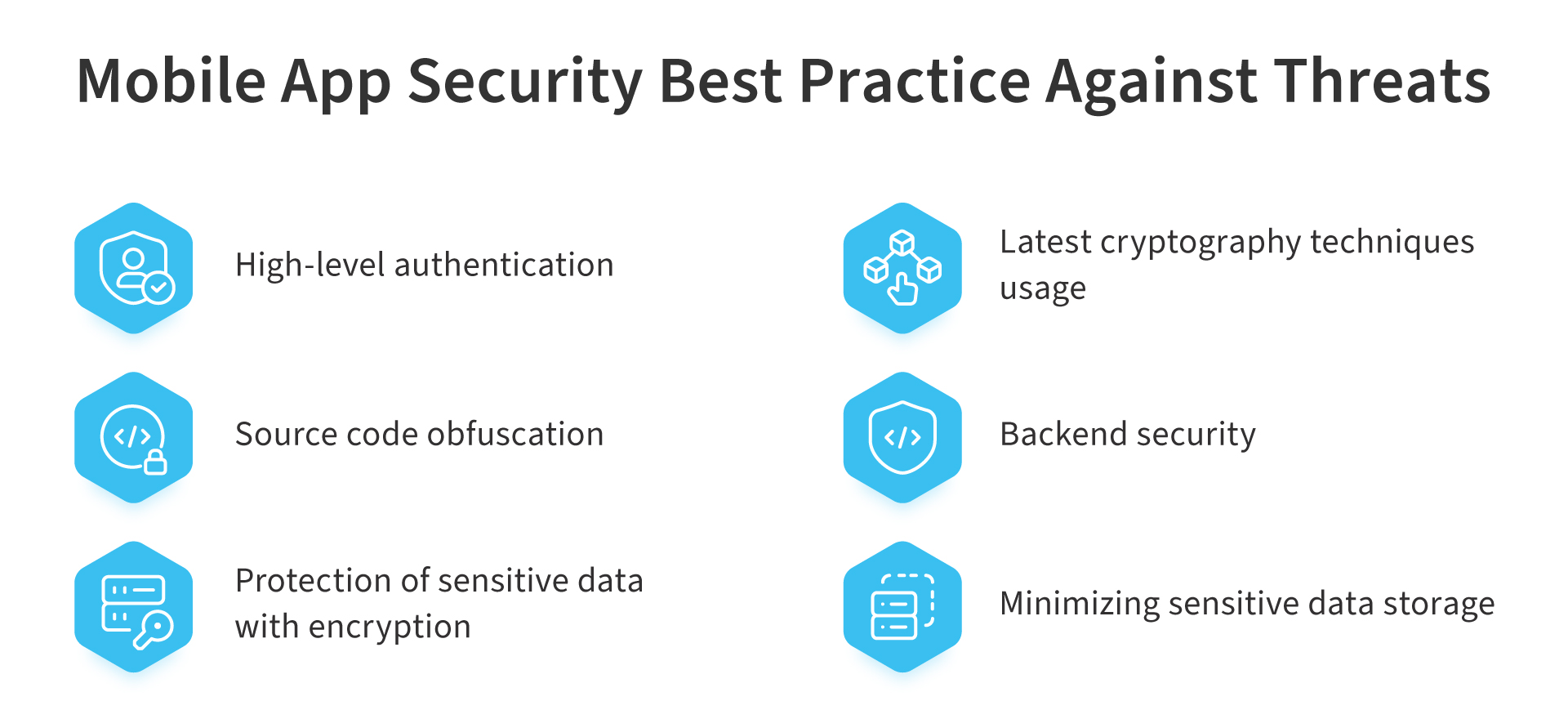
Best Practices for Mobile App Security
1. Implement Strong User Authentication
Authentication is the first layer of security.
Businesses should use:
- Multi-factor authentication (MFA)
- Biometric authentication (fingerprint or facial recognition)
- Strong password requirements
- Secure session management
These measures significantly reduce unauthorized access.
2. Encrypt Sensitive Data
Encryption protects information while it is stored and transmitted.
Businesses should encrypt:
- Customer information
- Payment details
- Login credentials
- Business records
- API communications
Even if attackers gain access to encrypted data, it remains unreadable without the appropriate encryption keys.
3. Secure API Communication
APIs connect mobile applications with cloud services and backend systems.
To improve API security:
- Use HTTPS for all communications.
- Implement API authentication.
- Validate all incoming requests.
- Limit API permissions.
- Monitor API activity regularly.
Secure APIs reduce the risk of unauthorized access and data leakage.
4. Follow Secure Coding Practices
Many security vulnerabilities originate during software development.
Developers should:
- Validate user inputs.
- Prevent SQL injection attacks.
- Protect against cross-site scripting (XSS).
- Avoid hardcoding sensitive credentials.
- Use trusted development libraries.
- Review code regularly.
Secure coding reduces the likelihood of exploitable vulnerabilities.
5. Keep Software Updated
Outdated applications often contain known security vulnerabilities.
Businesses should:
- Release regular security updates.
- Apply patches quickly.
- Update third-party libraries.
- Remove unsupported software components.
Frequent updates protect applications from newly discovered threats.
6. Protect User Privacy
Privacy has become a major concern for mobile users.
Businesses should:
- Collect only necessary information.
- Explain how user data is used.
- Obtain proper user consent.
- Follow applicable privacy regulations.
- Allow users to manage their privacy settings.
Transparent privacy practices build customer trust.
7. Perform Regular Security Testing
Security testing helps identify weaknesses before attackers can exploit them.
Recommended testing methods include:
- Vulnerability assessments
- Penetration testing
- Source code reviews
- Security audits
- Automated scanning
Continuous testing ensures applications remain secure as new features are introduced.
Benefits of Strong Mobile App Security
Businesses that prioritize security gain several long-term advantages:
- Increased customer confidence
- Reduced cybersecurity risks
- Better regulatory compliance
- Stronger brand reputation
- Lower recovery costs after security incidents
- Improved application reliability
Security is not only a technical requirement—it is also a competitive advantage that helps businesses build lasting relationships with customers.
Securing Cloud-Based Mobile Applications
Most modern mobile applications rely on cloud platforms to store data, process transactions, and manage user accounts. While cloud computing improves scalability and performance, it also introduces additional security responsibilities.
Businesses should secure cloud-connected mobile apps by:
- Encrypting data stored in the cloud.
- Using secure cloud authentication.
- Implementing role-based access control (RBAC).
- Monitoring cloud activity continuously.
- Performing regular cloud security audits.
- Creating automated backup and disaster recovery plans.
A secure cloud infrastructure ensures business continuity while protecting sensitive customer information from unauthorized access.
How Artificial Intelligence Improves Mobile App Security
Artificial Intelligence (AI) is becoming an essential component of cybersecurity. AI-powered security systems can identify suspicious activities much faster than traditional monitoring tools.
Businesses are using AI to:
1. Detect Fraud
AI analyzes user behavior and transaction patterns to identify fraudulent activities before they cause damage.
2. Identify Security Threats
Machine learning algorithms continuously monitor applications and detect unusual login attempts, malware, or abnormal network activity.
3. Automate Threat Response
AI can automatically block suspicious accounts, notify administrators, and isolate compromised systems without manual intervention.
4. Improve User Authentication
Behavioral authentication uses AI to recognize how users interact with an application, adding an extra layer of protection beyond passwords.
By combining AI with strong security practices, businesses can significantly reduce cyber risks and improve application reliability.
Mobile App Security Compliance
Businesses that collect customer information must comply with various privacy and security regulations depending on their industry and operating region.
Common compliance requirements include:
- Data protection regulations
- Payment security standards
- Healthcare data privacy requirements
- Consumer privacy laws
Meeting these standards helps businesses protect user information, avoid legal penalties, and strengthen customer trust.
Common Mobile App Security Mistakes to Avoid
Many security breaches occur because of avoidable mistakes during development or maintenance.
Some of the most common mistakes include:
1. Hardcoding Sensitive Information
Passwords, encryption keys, and API credentials should never be stored directly in application code.
2. Ignoring Security Updates
Delaying software updates leaves applications vulnerable to newly discovered threats.
3. Weak Password Policies
Allowing simple or easily guessed passwords significantly increases the risk of unauthorized access.
4. Poor Session Management
User sessions should expire automatically after periods of inactivity to reduce account hijacking risks.
5. Insufficient Testing
Skipping security testing before deployment often results in vulnerabilities reaching production environments.
Avoiding these mistakes greatly improves the overall security of a mobile application.
Why Custom Development Improves Mobile Security
Every business has unique security requirements that cannot always be addressed by generic mobile applications. Custom-built applications provide greater flexibility to implement advanced authentication, secure integrations, encrypted communication, and business-specific access controls.
Organizations often choose Custom Software Development Services to develop secure mobile applications that integrate with existing business systems, comply with industry regulations, and support future scalability. Custom software enables businesses to implement security features that align with their operational requirements while providing greater control over application architecture and data protection.
Best Practices for Long-Term Mobile App Security
Mobile app security should be an ongoing process rather than a one-time activity. Businesses should regularly review and improve their security strategies.
Recommended best practices include:
- Monitor application performance continuously.
- Perform regular penetration testing.
- Conduct security awareness training for employees.
- Update third-party libraries and dependencies.
- Implement secure backup and disaster recovery plans.
- Use advanced monitoring tools to detect threats.
- Review user permissions periodically.
- Maintain detailed security logs for incident investigations.
Continuous improvement helps businesses stay ahead of evolving cybersecurity threats.
Future Trends in Mobile App Security
As mobile technology evolves, businesses should prepare for emerging security innovations such as:
- AI-powered threat detection
- Zero Trust security architecture
- Passwordless authentication
- Biometric identity verification
- Blockchain-based security solutions
- Cloud-native security platforms
- Behavioral analytics
- Privacy-enhancing technologies
- Secure DevSecOps practices
- Advanced endpoint protection
Organizations adopting these technologies will be better equipped to protect sensitive information and maintain customer confidence.
Frequently Asked Questions (FAQs)
1. Why is mobile app security important?
Mobile app security protects sensitive customer and business information from cyber threats, unauthorized access, and data breaches while improving user trust.
2. What is the biggest security risk for mobile applications?
Common risks include insecure APIs, weak authentication, malware, poor encryption, insecure data storage, and outdated software.
3. How often should mobile apps receive security updates?
Applications should be updated regularly whenever new vulnerabilities, security patches, or feature improvements become available.
4. Can Artificial Intelligence improve mobile security?
Yes. AI helps detect fraud, monitor unusual activity, automate threat responses, and strengthen user authentication.
5. How can businesses improve mobile app security?
Businesses should implement encryption, strong authentication, secure coding practices, regular security testing, continuous monitoring, and timely software updates.
Conclusion
Mobile applications have become one of the most valuable digital assets for modern businesses, making security a top priority rather than an optional feature. As cyber threats continue to evolve in 2026, organizations must adopt a proactive approach to protecting customer information, business data, and application infrastructure.
Implementing strong authentication, encrypting sensitive data, securing APIs, following secure coding practices, and conducting regular security testing are essential steps toward building trustworthy mobile applications. Businesses should also embrace emerging technologies such as Artificial Intelligence and cloud-based security solutions to identify threats more quickly and respond effectively.
Security is not a one-time implementation but a continuous process that requires regular monitoring, updates, employee awareness, and ongoing improvement. Organizations that invest in secure mobile application development not only reduce cybersecurity risks but also strengthen customer confidence, improve compliance, and build a stronger brand reputation.
As businesses continue to expand their digital presence, prioritizing mobile app security will be essential for delivering safe, reliable, and high-performing mobile experiences that support long-term business growth and success.